
blog
Demystifying the Production Process: Inside a Custom Crossbody Bag Manufacturer
Sep
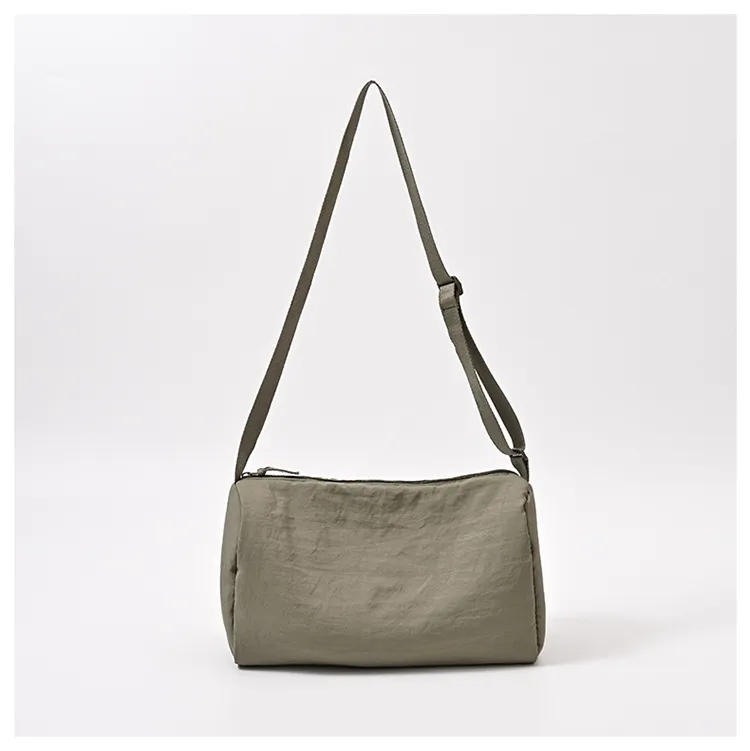
Bringing a custom accessory to the retail market is a complex journey that requires precision, technical expertise, and a deep understanding of fashion logistics. For brands looking to capitalize on the soaring global demand for hands-free accessories, understanding how a product goes from a digital sketch to a physical reality is crucial. When you partner with a specialized crossbody bag manufacturer, you are not just buying a product; you are engaging in a multi-step engineering and assembly process.
Knowing what happens behind the factory doors empowers brand owners to manage timelines, communicate effectively with their production partners, and ultimately deliver a superior product to their customers. Here is an in-depth, behind-the-scenes look at the custom manufacturing process for crossbody bags.
1. Technical Design and the Blueprint Phase
Long before any fabric is cut, the foundation of a successful production run is laid during the technical design phase. The process begins with a Tech Pack—a comprehensive blueprint that serves as the ultimate instructional manual for the factory floor.
Because crossbody bags are designed to sit close to the body, often resting on the hip or across the chest, the exact dimensions and proportions are vital. A professional crossbody bag manufacturer will review your tech pack to ensure the design is structurally viable. This document must include detailed flat sketches, exact dimensional measurements for every panel, Pantone color codes for fabrics, and highly specific hardware callouts. If a brand lacks an in-house technical designer, a premium manufacturing partner will typically offer development services to help translate inspiration boards into factory-ready specifications.
2. Strategic Material and Hardware Sourcing
Once the design is locked in, the facility moves into the sourcing phase. The materials chosen dictate not only the aesthetic of the bag but also its retail price point and longevity. An established manufacturer leverages a vast network of suppliers to procure exactly what your design requires.
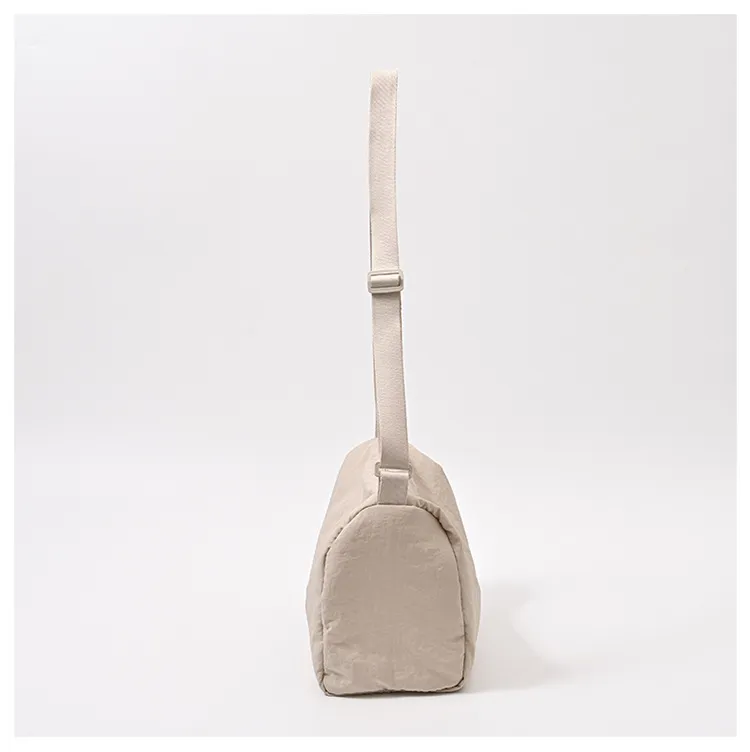
For the main body of the bag, the factory might source lightweight, water-resistant nylons for a sporty streetwear look, or luxurious, cruelty-free vegan leathers for a contemporary fashion silhouette. However, the true defining feature of this specific accessory style is the strap and its accompanying hardware. The sourcing team must procure high-tensile webbing or reinforced fabric for the strap, alongside heavy-duty slider buckles for adjustability. Swivel snap hooks and D-rings are also sourced, often customized with specific metal finishes—such as brushed gunmetal or polished gold—to match the brand’s visual identity.
3. The Prototyping and Ergonomic Testing Stage
Prototyping is where the magic happens. The factory’s sample room, staffed by master pattern makers and veteran sewers, creates the very first physical iteration of your design.
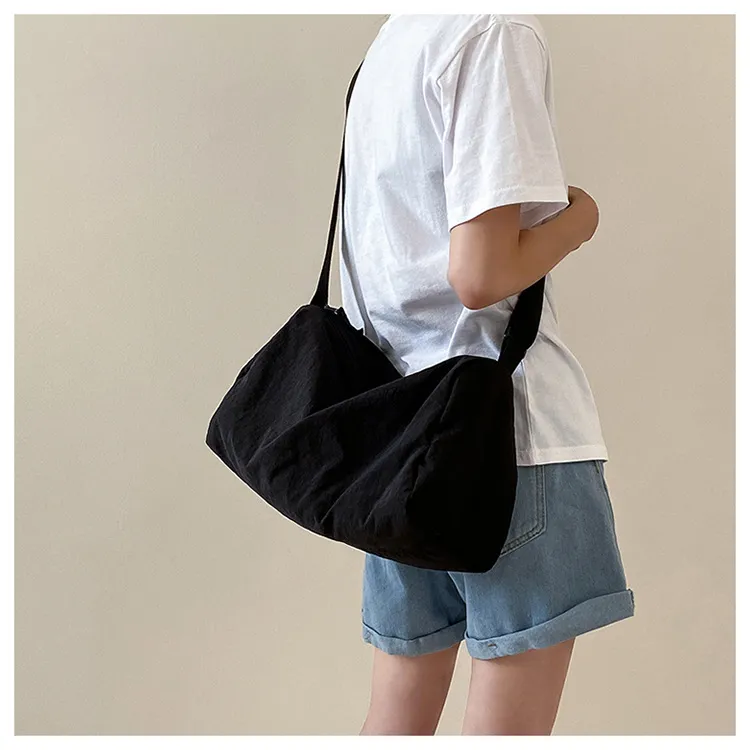
For a crossbody bag, prototyping is uniquely challenging. The bag must drape correctly against the human body, the strap drop-length must accommodate various heights, and the weight distribution must remain balanced even when the bag is full. During this phase, brand owners evaluate the first sample to check the ergonomics. Are the zippers easy to access with one hand? Does the strap dig into the shoulder? Revisions are made based on this feedback until a “Golden Sample”—or Pre-Production Sample (PPS)—is finalized and approved for mass manufacturing.
4. Precision Cutting and Bulk Assembly
With the PPS approved, mass production officially commences. Large rolls of the sourced textiles are laid out on massive cutting tables. Utilizing advanced laser-cutting technology or hydraulic die presses, the factory precisely cuts the individual panels for hundreds or thousands of bags simultaneously. This ensures absolute uniformity across the entire production run.
These panels are then bundled and moved to the sewing lines. A high-quality crossbody bag manufacturer operates a highly synchronized assembly line where different technicians specialize in specific tasks. Some operators focus solely on attaching interior linings and RFID-blocking pockets, while others specialize in stitching the exterior gussets. Crucially, industrial bartack machines are used to reinforce the stress points where the strap attachments meet the main body of the bag, guaranteeing that the accessory will not tear under heavy loads.
5. Stringent Quality Assurance and Final Packaging
The final stage of the manufacturing pipeline is a rigorous Quality Assurance (QA) protocol. A top-tier facility does not simply wait until the end of the line to check for errors; they employ inline inspectors who monitor the stitching and hardware attachment throughout the assembly process.
Once fully assembled, each bag undergoes a final inspection. QA specialists test every zipper for smooth gliding, check the functionality of the adjustable straps, trim any loose microscopic threads, and ensure that all custom branding (such as embossed logos or woven labels) is perfectly aligned. Finally, the bags are carefully packaged. Depending on the brand’s requirements, they may be stuffed with tissue to hold their shape, placed inside custom-branded dust bags, sealed in protective polybags, and meticulously packed into master export cartons, ready to be shipped globally.
Conclusion
Creating a successful retail product requires a seamless blend of creative vision and industrial precision. By understanding the intricate steps involved in the production pipeline, brands can foster a more collaborative and efficient relationship with their crossbody bag manufacturer. From the initial tech pack to the final quality control check, every phase is critical to ensuring your customers receive an accessory that flawlessly combines fashion, function, and enduring quality.
